
I woke up moments before 7 am to the sight of a police car. I shouted over to Cooper, who was buried in his sleeping bag. “Wake up, the cops are here!”
As it turns out, camping beside an active roadway on USFS land is not entirely legal. After an amicable chat with officer Klucke, we packed up and drove down the road to the trailhead.
After two years of cancelled trips, the day was finally here–I’d convinced my roommates to join me to ski on the flanks of Mount Washington, the spring skiing Mecca of the East Coast. It was shaping up to be a beautiful day too–clear skies and warm temps. In fact, the conditions were just right for a perfect freeze-thaw cycle, the predecessor to impeccable corn snow.
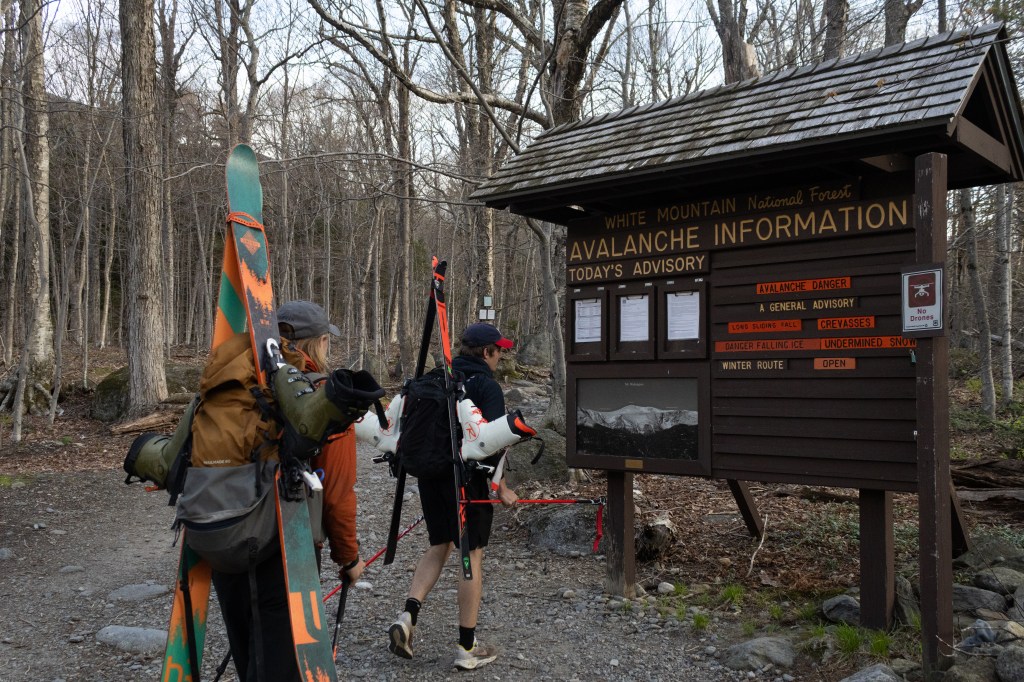
As we began our adventure from Pinkham notch, we were bounded on all sides by deciduous forest. But before long, our surroundings began to change, with patches of moss cropping up beside the trail, and conifers becoming interspersed more frequently.
A cool breeze wafted through the air as we gained more and more elevation. At one point, we stopped at a wide wooden footbridge to get a sip of water. Our surroundings were magical; the crystal-clear streams and bald peaks were reminiscent of Colorado’s Rockies.

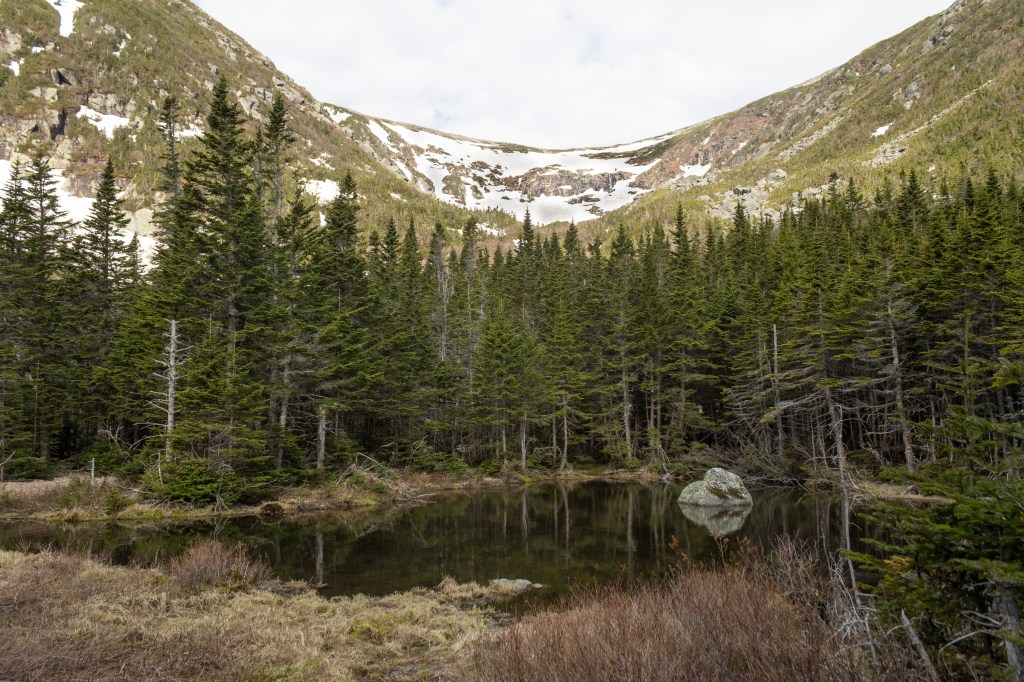
The next two miles to Hermit Lake Shelter flew by. Bounded by tall conifers, we picked our way through cobble-like stones that formed the trail. The trees parted and gave way to a small clearing–in the center stood Hermit Lake Shelter, set against the impressive backdrop of Mount Washington.
Just past the shelter, we found an old-school water pump, where we refilled our bottles. Meanwhile, a solo skier passed by. The smoke that wafted our way gave proof to his more “European” approach to outdoor pursuits.
From Hermit Lake, the trail began to wind upwards, following the contour of the ravine. The trees dropped away and we entered into the alpine zone. Just before 10am, we were standing on snow at the base of the ravine. Time to boot up!
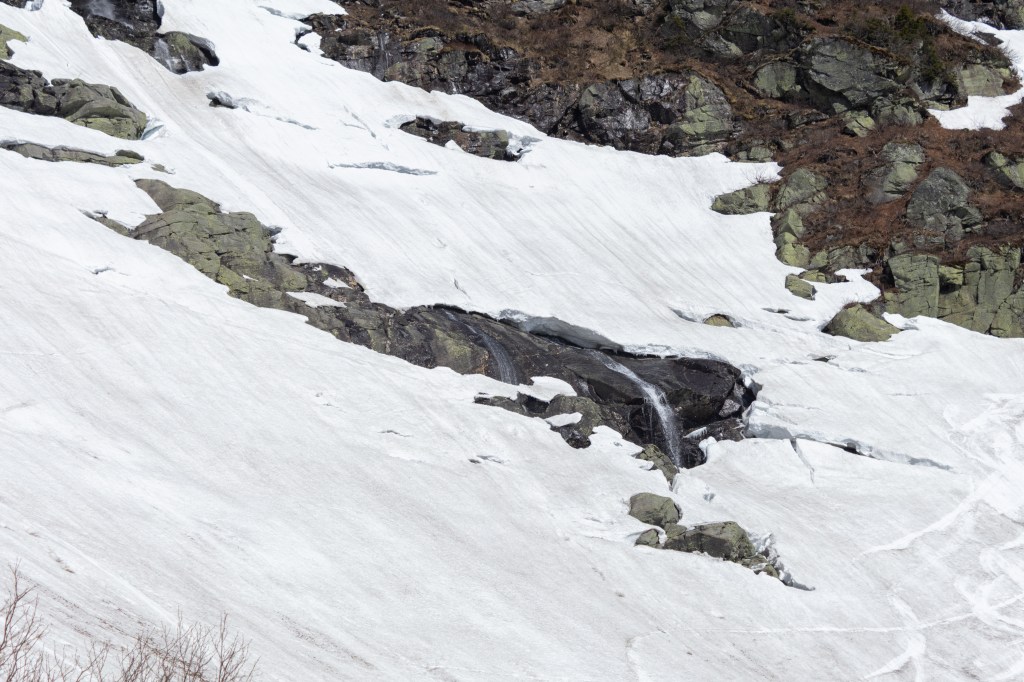
Given that it was a random Monday, and rather late in the season (even for Tucks standards), only a few other groups joined us in the ravine. Word of mouth and the little research I carried out both made me wary of the potential for conga-lines and throngs of other people–both of which were nowhere to be seen.
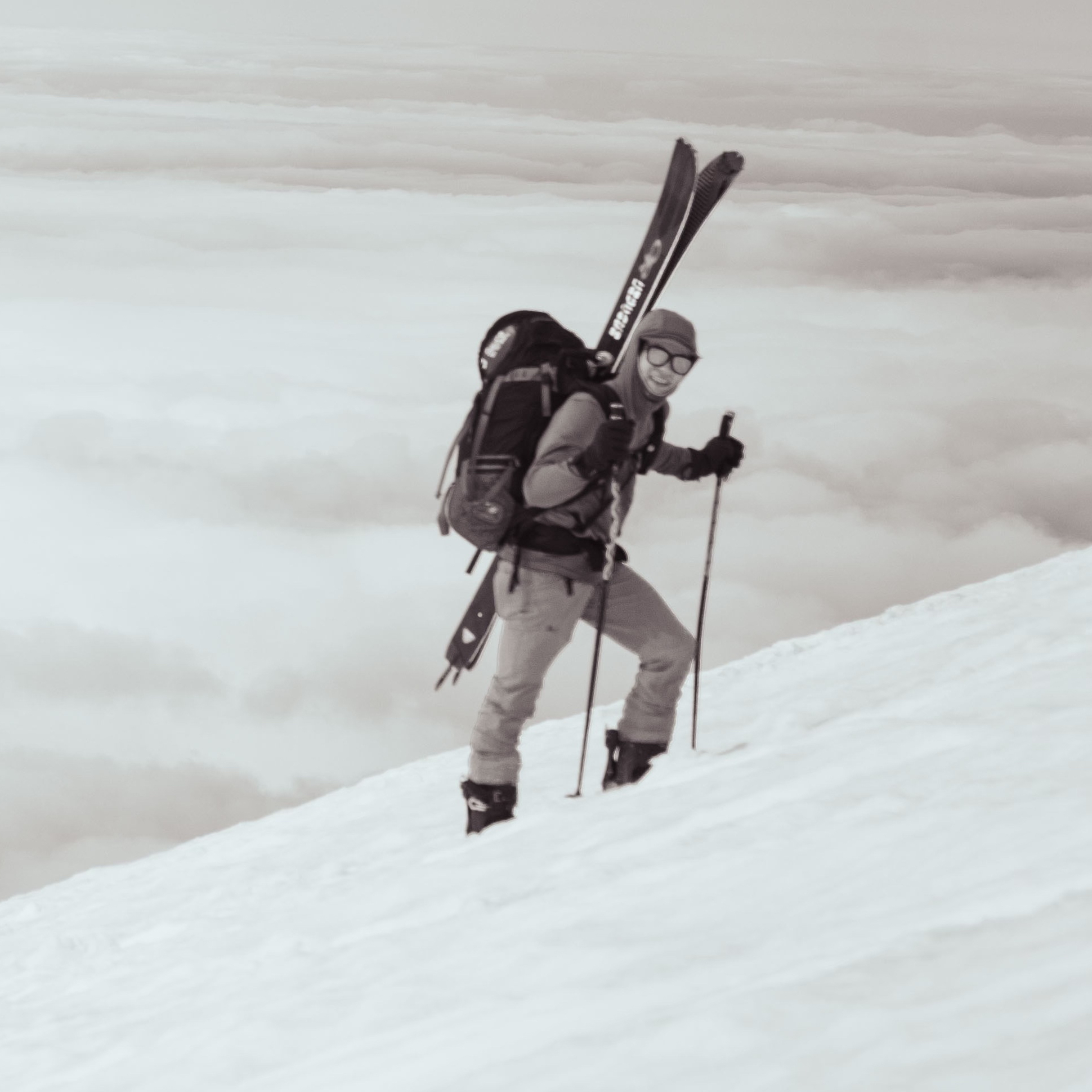
After our transition to winter gear, we started up the steepening wall of the cirque. It was slow going, but Cooper made sure to charge ahead, pushing us to keep a solid pace.
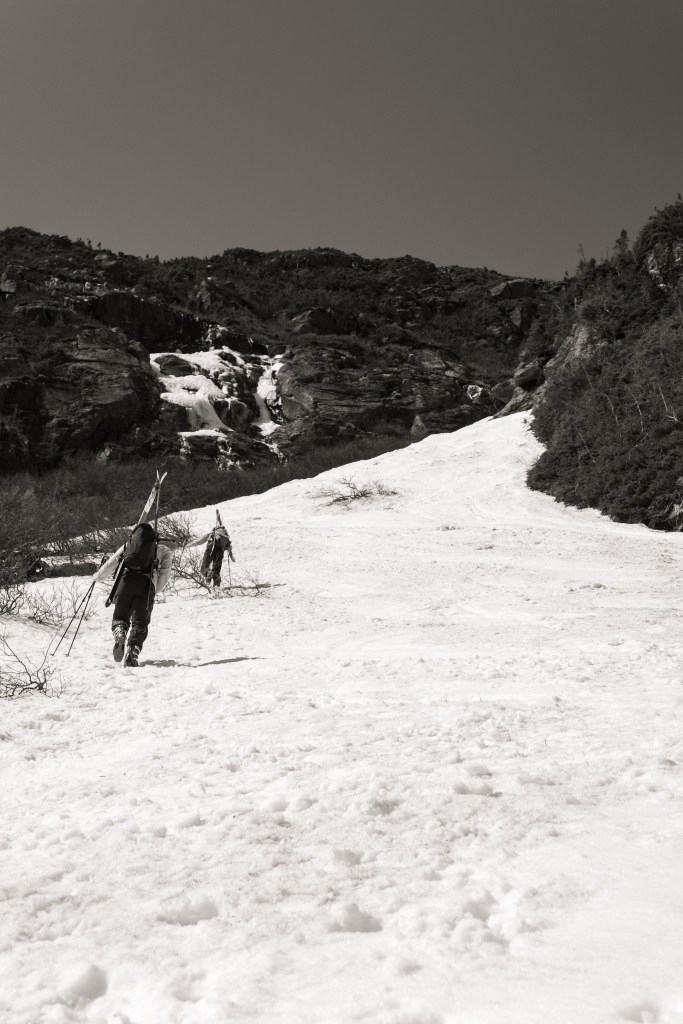
Soon we were bounded on both sides by the steep rock walls of Left Gully, a classic late-season chute on Mount Washington’s southeast flanks. Every so often I would take a glance behind me, the valley floor growing smaller and smaller.
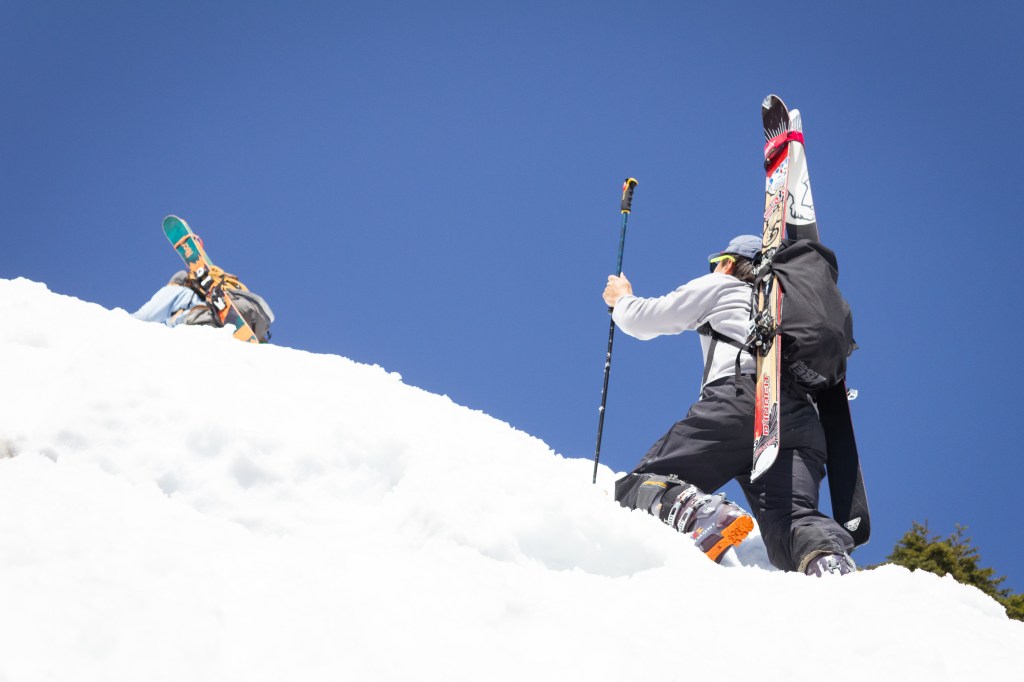
At last, we reached the top of the line, which seemed to be about 50 degrees in slope. Climbing up required digging steep steps into the sugary snow and hoping not to slide all the while.
Once all four of us reached the top, we gave a collective hoot–not only for the successful climb, but also for the symbolism of where we were. It had taken two seasons of scheduling to make this trip work, and here we finally were. Even though I approached these friends with minimal notice, they were still into the idea purely for the novelty of it all.

Right before dropping in, a fellow skier told our group about a Tucks “horror story,” in which he witnessed another skier lose his ski to gravity. In other words, when he went to put in on his foot, it slipped away, shooting almost 1000 vertical feet down the gut.
With that image in my mind, I clicked into my skis with caution, and we set off down the gully one by one. The first couple of turns, I threw down some tight hop turns over large moguls, carved by countless other skiers before me. The snow was perfect–firm, yet slushy on top.
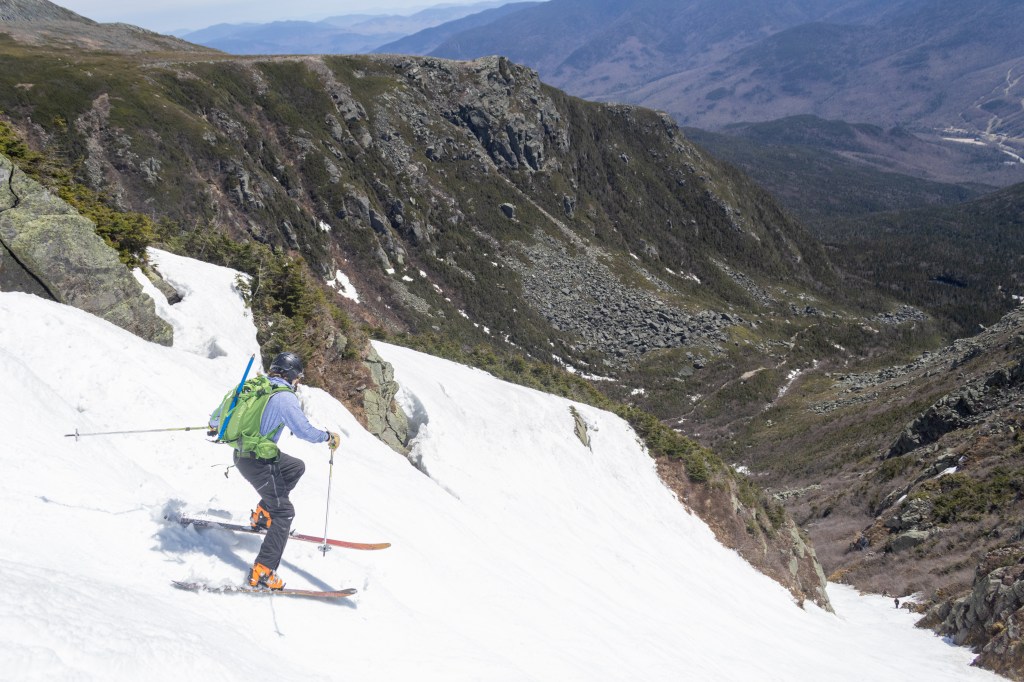


On the descent, we skied in a pack. Charging down the ravine, we passed a growing file of hikers boot-packing up the gully. After a couple more lazy turns on the flattening slope, we reached the terminus of the snowfield.
In a show of nature’s spontaneous strength, an SUV-sized chunk of ice cracked off from the head of the ravine, tumbling down towards us and some fellow onlookers. We made for the cover of a large boulder, but luckily the projectile had disintegrated before reaching our spot. Never underestimate the power of Agiocochook–even in early May.
Agiocochook – The native name for Mount Washington, which translates to “Mother Goddess of the Storm” or “Home of the Great Spirit” in Abenaki tongue.


 Noah's Adventures
Leave a comment